

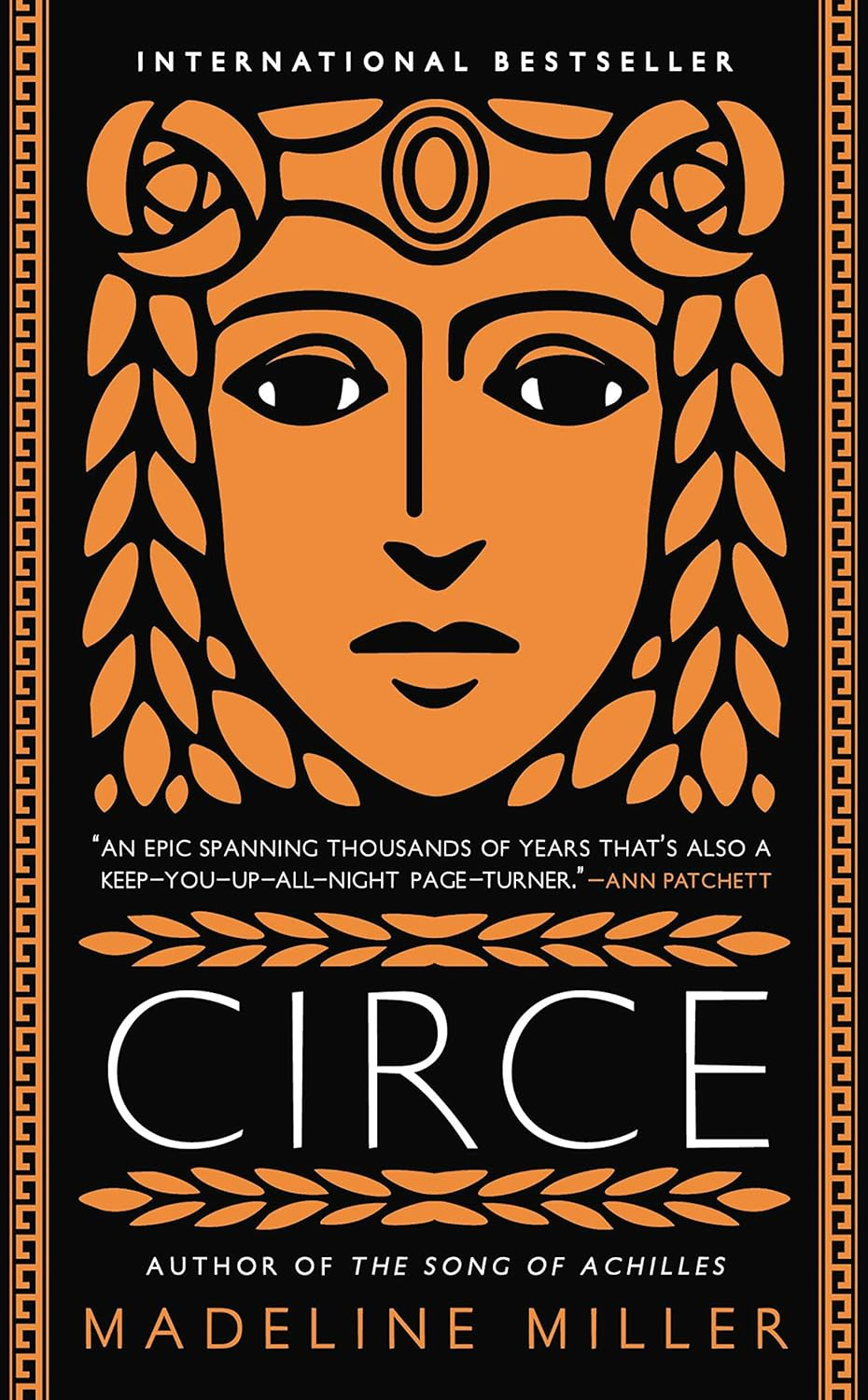
Circe
Madeline Miller
What the least becomes
Circe is a child of Titan Helios (the Sun) and nymph Perse. (By the way, the name Circe is derived from Greek κίρκος , meaning "hawk", and therefore is pronounced Kirke. Feel free to ignore that if you don't like it or if all your friends call her Sersee.) Circe is the first and least of the four children of Helios and Perse -- the others are brother Perses (ruler of Persia), sister Pasiphaë (queen of Crete and mother of the Minotaur) and brother Aeëtes (king of Colchis).
In Madeline Miller's telling, Circe has a hand in many of the most famous stories of classical Greece. I will not spoil Miller's tale by listing all the stories in which Circe has a part, but one in particular can be mentioned (because it is already mentioned in the publisher's blurb): The Odyssey. Odysseus is an important character in Circe. Circe is not a retelling of The Odyssey. It alludes lightly to the main events of Homer's poem and instead tells stories that surround it. (If, like me, you are an admirer of Tennyson's poem "Ulysses", you will catch hints of it here.)
Circe comes to despise the gods. She is right to hold them in contempt. They are foolish vain, spoiled children, impatient and unable to endure pain or inconvenience. They retain power because of what I will anachronistically call their superpowers. Athena is the queen of battle and craft, Zeus has lightening, Helios can vaporize anyone who displeases him in an eyeblink.
Circe is none of these things. She is born with no special powers. She is patient and intelligent. More than that, she is compassionate and cruel, wise and foolish, fearful and courageous. I will not insult your intelligence by suggesting that there is any contradiction in one person being all of these things. Every one knows that there is no courage without fear, and that wisdom arrives as a result of learning from past foolishness.
Reading Circe, you will come to realize something that Circe herself, tortured by self-doubt, never quite figures out. Far from being the least of her family, Circe is the greatest. Not just of her family, but of all the gods. That she is better is hardly disputable. That she is stronger is a proposition that requires a more subtle understanding of strength and a more nuanced argument, which, for the sake of avoiding spoilers, I cannot make here.
For me, Circe's growth is the story. The classical Greek tales are fun and give Miller a plot, but it is all about Circe becoming. Although I am largely oblivious to feminist scholarship, I love stories with strong female heroes. Circe was always destined to be a favorite.
Excellent review! 💯
Sounds like a great story that really gets someone thinking about themes like critical thinking and looking at things in some different ways than one has looked at them before. ⚖️
Thank you for sharing this excellent review with us readers! 🙏