

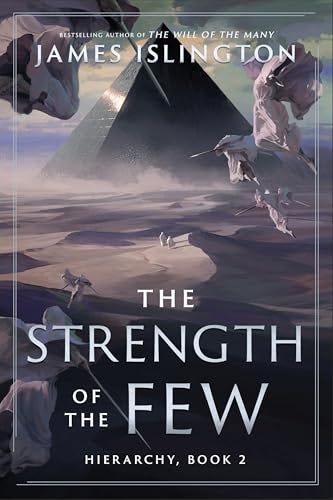
The Strength of the Few
James Islington
Vis times three
James Islington‘s The Strength of the Few is the second novel in his Hierarchy series. It is quite different from novel 1, The Will of the Many in structure and tone. The Will of the Many was a puzzle in ethical philosophy in the form of a magic school novel. The Strength of the Few is about a battle that takes place across three universes. Our heroes Vis are the contact point of these universes. How did Vis become plural? As explained in the publisher’s blurb
I am no longer one. I won the Iudicium, and lost everything—and now, impossibly, the ancient device beyond the Labyrinth has replicated me across three separate worlds. A different version of myself in each of Obiteum, Luceum, and Res. Three different bodies, three different lives. I have to hide; fight; play politics. I have to train; trust; lie. I have to kill; heal; prove myself again, and again, and again.
The events that ended The Will of the Many copied Vis, unknown to himself, from Res into the two universes Obiteum and Luceum. Res is the world we came to know in The Will of the Many. It resembles Earth’s Roman Republic, but with a kind of magic called Will. Obiteum seems to be modeled after ancient Egypt and Luceum after early Britain. These other worlds also have Will, but it works differently in each.
With few exceptions, each chapter of The Strength of the Few takes place in just one of these three worlds. You can tell which world you’re about to read about because those chapters that take place in Obiteum begin with an image of an Ankh, those in Luceum with a whorl, and those in Res with the familiar columns that symbolize the Catenan Hierarchy. The worlds do not alternate strictly -- you may have three chapters in a row set in the same world before switching to a different one. This makes some demands on the reader’s memory. Islington likes to switch worlds at the most fraught moments. Thus you often slam into a new world in which Vis is in a dire situation that you have kind of forgotten about since the last visit to that world. That said, I didn’t find it very hard to follow the story.
The three stories are, for the most part, separate. There is only a little communication from one world to the other two. They are connected, however, by a big overarching plot that I will not spoil. Within each you get what will look to long-time fantasy readers like a more-or-less standard sword and sorcery plot. They’re good stories and well told.
I enjoyed this more than The Will of the Many. That was too much like a novel-shaped ethical philosophy textbook. Besides, I think we’ve all seen enough of the Magic School trope. The Strength of the Few is more like three rather good intertwined novels. The ethical dilemmas of The Will of the Many are not irrelevant -- they inform the character’s motivations, but they are less heavy-handed in The Strength of the Few.
The Strength of the Few is clearly not the final book in the series. The story doesn’t come to anything like a conclusion. I will certainly read the third book, when it comes out.